

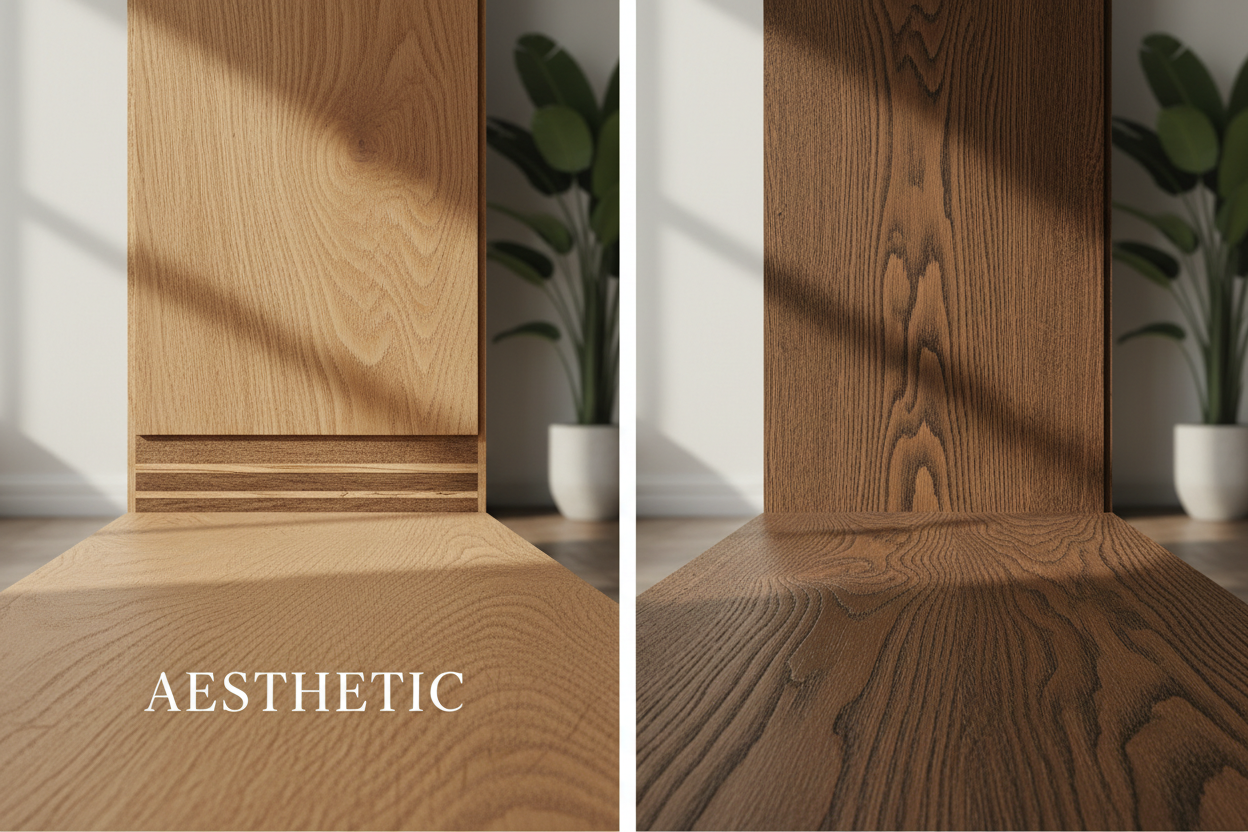
Selecting the right oak flooring for your home is one of the most important decisions you'll make when it comes to interior design. Not only does it set the tone for your space, but it also needs to suit your lifestyle, budget, and practical requirements. Whether you're renovating a single room or your entire home, understanding the differences between engineered and solid oak, along with the various dimensions and finishes available, will help you make a choice you'll love for years to come.
Engineered vs. Solid Oak: Understanding the Difference
Both engineered and solid oak flooring offer the authentic beauty of real wood, but they differ in construction and performance.
Solid Oak Flooring is milled from a single piece of wood and offers the classic appeal of traditional hardwood. It's thicker, typically between 18mm and 20mm, which means it can be sanded and refinished multiple times throughout its lifetime. This makes it an excellent long-term investment if you're willing to maintain it. Solid oak is ideal for stable, climate-controlled environments and tends to develop a rich patina over time that many homeowners find beautiful.
Engineered Oak Flooring features a real oak veneer bonded to a plywood or hardwood base. This construction makes it more stable and resistant to moisture and temperature fluctuations, making it suitable for kitchens, bathrooms, and basements where solid wood might struggle. Engineered flooring is also typically more affordable than solid oak and easier to install, often featuring click-lock systems. However, because the veneer is thinner, refinishing options are more limited—though many engineered floors come pre-finished to a high standard.
Board Width: Finding the Right Scale for Your Space
The width of your floorboards has a significant impact on how a room feels and looks.
Narrower boards (typically 70–90mm) create a more traditional, intricate appearance and work particularly well in smaller rooms or period properties. They can make a space feel cosier and more detailed, and they're often easier to fit around obstacles and doorways.
Wider boards (120mm and beyond) create a more contemporary, spacious feel and showcase the natural grain of the wood beautifully. They're ideal for larger rooms where you want to make a bold design statement. Wider boards also mean fewer joints, which can make cleaning easier and create a more seamless visual flow.
Consider the proportions of your room: larger spaces generally benefit from wider boards, whilst narrower boards suit smaller areas or rooms with lots of architectural features.
Thickness: Balancing Durability and Installation
The thickness of your flooring affects both its durability and how it integrates with your existing floor heights.
Solid oak typically comes in thicker profiles (18–20mm), offering maximum durability and the ability to be refinished. Engineered oak is usually thinner (10–14mm), which makes it ideal if you have height constraints—for example, if your flooring needs to sit flush with existing doorways or transitions to other rooms.
Thicker boards generally feel more substantial underfoot and offer better sound insulation, whilst thinner engineered options are more practical for retrofitting into existing spaces without major adjustments to door frames or transitions.
Finishes: Choosing Between Oiled and Lacquered
The finish you choose affects both the appearance and maintenance requirements of your floor.
Oiled Finishes enhance the natural grain and colour of the oak, giving your floor a warm, authentic look. Oiled floors develop a natural patina over time and feel pleasant underfoot. The main advantage is that they can be refreshed and refinished relatively easily, allowing you to restore the floor's appearance or change the colour as your tastes evolve. However, oiled floors require more regular maintenance and are more susceptible to staining and water damage, so they're best suited to living areas rather than kitchens or bathrooms.
Lacquered Finishes provide a protective hard-wearing surface that resists scratches, stains, and moisture far better than oiled finishes. They're ideal for high-traffic areas, kitchens, and homes with children or pets. Lacquered floors are easier to clean and maintain, requiring only regular sweeping and occasional damp mopping. The trade-off is that they can't be easily refinished—once the lacquer wears through, the floor typically needs professional restoration rather than a simple refresh.
Bringing It All Together
Your ideal floor depends on balancing aesthetics, practicality, and your home's specific needs. If you value the ability to refinish and refresh your floor over time, and you have a stable, climate-controlled environment, solid oak with an oiled finish offers timeless appeal. If you need durability, moisture resistance, and ease of maintenance—or if you're working with height constraints—engineered oak with a lacquered finish is a smart choice.
Take time to consider your room's size, your lifestyle, and how you want your space to feel. Visit our showroom or browse our collection online to see the different widths, thicknesses, and finishes available, and imagine how each option would look in your home.
Share: